
 By Naomi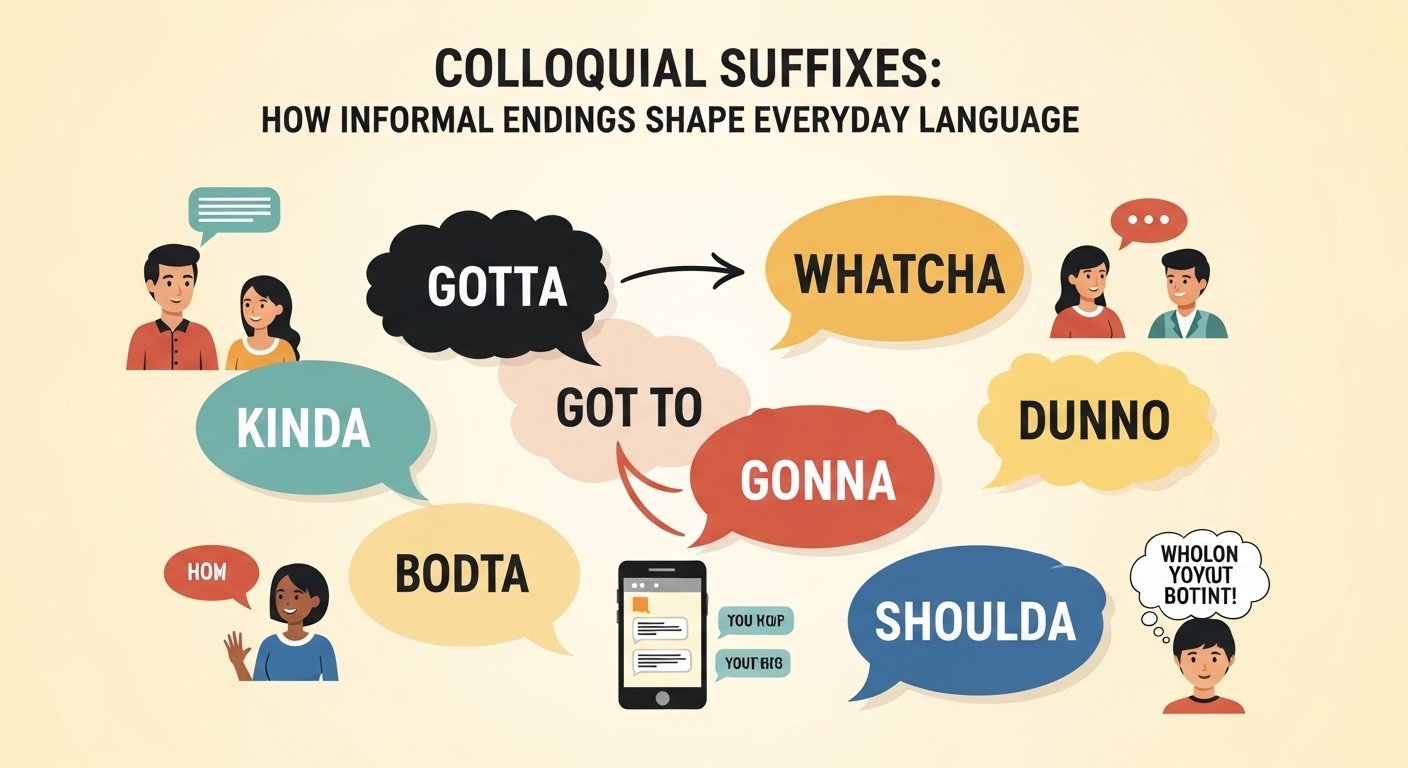
Language is a living, breathing entity. It evolves and adapts to the way we communicate in our daily lives. One fascinating aspect of this evolution is the use of colloquial suffixes. These informal endings add flavor and nuance to our conversations, turning standard phrases into something more relatable and engaging.
Think about it: how often do you hear someone say “it’s all good” or “I’m feeling kinda tired”? These expressions are infused with personality thanks to their playful suffixes. From shortening words to creating entirely new meanings, colloquial suffixes reflect the cultural quirks and social dynamics of everyday speech.
Let’s dive deeper into these linguistic nuggets that shape how we connect with each other!
Popular Colloquial Suffixes and Their Meanings
Colloquial suffixes add flavor to everyday language. They can transform a simple word into something more relatable and casual.
Take “-y” or “-ie.” Adding these makes words like “dog” become “doggy.” This intimate touch often conveys affection.
Another popular one is “-o.” Think of how “photo” morphs into “photo-o,” suggesting familiarity or playfulness. It’s common in names too, creating nicknames like “Mario” turning into just “Marios.”
Then there’s the cheeky “-ster.” Words like “hipster” signal a certain vibe, enhancing identity through language.
The suffix “-ish” suggests approximation or uncertainty—like saying someone is tall-ish, leaving room for interpretation.
These playful endings shape communication dynamically and foster connections among speakers, making conversations lively and engaging.
The History and Evolution of Colloquial Suffixes
Colloquial suffixes have a rich history that mirrors the evolution of language itself. They often arise from everyday speech, reflecting cultural shifts and social dynamics.
In many cases, these endings emerged in response to societal changes. As communities blended, so did their languages. Suffixes became tools for informal communication, enhancing relatability among speakers.
Take “gonna” or “wanna,” for instance. These forms originated from contractions over time, making conversations smoother and more casual.
Languages evolve as societies do. Colloquial suffixes adapt to modern influences like technology and globalization. New generations introduce fresh expressions that can quickly gain popularity.
This fluidity keeps language vibrant and engaging while capturing the essence of contemporary life—words change as we do. The journey of colloquial suffixes shows how linguistic creativity thrives amidst our daily interactions.
Impact of Colloquial Suffixes on Everyday Language
Colloquial suffixes play a significant role in the evolution of everyday language. They add flavor and relatability to conversations, making them more engaging.
These informal endings often reflect cultural nuances and regional dialects. Words become transformed into expressions that resonate with specific communities. Think of how “cool” becomes “coolio,” or “friend” turns into “friendo.” This creativity fosters connection among speakers.
Moreover, colloquial suffixes can influence tone and context. They lighten discussions, making serious topics feel more approachable. When people use these playful forms, they create an inviting atmosphere for dialogue.
In digital communication, colloquial suffixes thrive even more prominently. Text messages and social media amplify their usage, allowing language to evolve at breakneck speed. As trends shift rapidly online, so do the meanings attached to various suffixes.
Understanding this impact helps us appreciate the rich tapestry of modern language as it adapts to societal changes.
Examples of Colloquial Suffixes in Different Languages
Colloquial suffixes add a vibrant flair to languages around the world. In English, we often see “-y” or “-ie” attached to names—think of calling someone “Johnny” instead of John. It brings warmth and familiarity.
Spanish utilizes the suffix “-ito” for endearment, transforming “perro” (dog) into “perrito,” making it sound cuter and more affectionate.
Meanwhile, Japanese employs “-chan” as a diminutive suffix that conveys intimacy or affection, especially towards children or close friends.
In Italian, adding “-ino” can make terms like “casa” (house) into “casina,” indicating something smaller or dearer.
These examples reflect how colloquial suffixes shape relationships within language communities while enhancing expression in everyday conversation.
Controversies Surrounding the Use
Colloquial suffixes stir up quite a debate. Some argue they dilute language, making it less formal and more casual. Critics often believe that these informal endings can lead to misunderstandings or miscommunications.
On the flip side, proponents celebrate colloquial suffixes as vital expressions of identity and culture. They argue that these elements add richness to everyday speech.
Language is ever-evolving, influenced by generational shifts and cultural changes. Sometimes traditionalists clash with modern linguists over what constitutes “proper” language use.
In educational settings, the use of colloquial suffixes raises eyebrows among teachers. Should students embrace them in academic writing? This question sparks discussions about linguistic evolution versus maintaining standards.
Social media fuels the fire too. The rapid spread of new colloquial terms can leave some feeling overwhelmed or alienated from their native tongue while others find joy in its adaptability and vibrancy.
How to Incorporate Colloquial Suffix
Using colloquial suffixes can add flavor and relatability to your language. To incorporate them seamlessly, start by listening to how people around you use these informal endings in conversation. Pay attention to context; some suffixes work better in certain settings than others.
Experiment with different colloquial suffixes when speaking or writing informally. For instance, instead of saying “friend,” try using “buddy” or “pal.” When discussing something exciting, consider adding “-tastic” for an enthusiastic vibe.
Engaging with social media platforms is another great way to learn new slang and colloquialisms. Observe how influencers and peers communicate their thoughts and emotions through language that feels natural yet vibrant.
Keep it appropriate for your audience as well. While it’s fun to sprinkle in casual terms among friends, a more professional setting may require a balance between formal language and catchy suffixes.
By understanding the nuances of colloquial suffixes, you can enrich your everyday conversations while connecting effectively with those around you. Embracing this linguistic tool opens up new paths for self-expression in various spheres of life.