
 By Naomi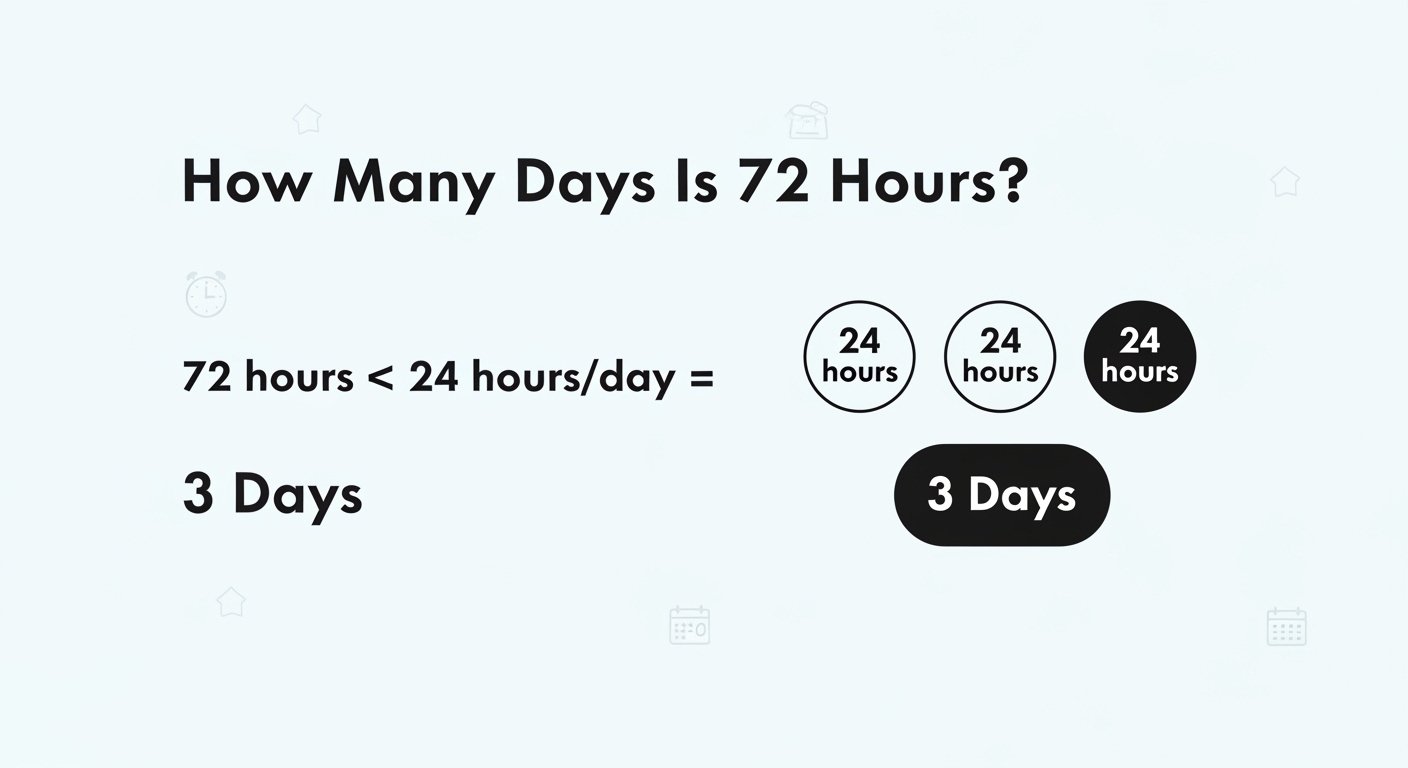
Time can often feel like a slippery concept, especially when we start juggling different measurements. You might find yourself asking, “How many days is 72 hours?” This seemingly simple question can lead to a deeper understanding of how we measure time and its relevance in our daily lives. Whether you’re planning an event or trying to gauge the duration of a task, having a solid grasp on time conversions can save you from confusion later on. So let’s break it down together and uncover the magic behind those ticking numbers!
Understanding Time Measurements
Time is a fundamental aspect of our lives. It shapes our routines, schedules, and even the way we think about events. Understanding time measurements helps us navigate daily tasks with ease.
At its core, time is divided into units: seconds, minutes, hours, days, and so forth. Each unit serves as a building block for measuring longer periods.
For instance, there are 60 seconds in a minute and 60 minutes in an hour. This structure allows us to convert between different time formats seamlessly. Days also play an integral role; they mark the cycle of night and day that many cultures have relied on throughout history.
While digital clocks may simplify this process today, grasping these basic concepts enhances our ability to communicate effectively about duration and scheduling across various contexts.
What is a Hour?
An hour is a basic unit of time measurement. It consists of 60 minutes, and that’s universally accepted.
Hours help us organize our daily lives. We use them for scheduling activities, work shifts, and appointments.
In many cultures, the division of hours dates back to ancient civilizations. The Egyptians were among the first to divide daytime into 12 parts and nighttime into another set of 12.
A common clock displays these hours in a circular format, allowing us to visualize time’s passage easily. Digital devices also show hours clearly with numbers.
Understanding an hour helps streamline communication about time-related events. Whether it’s planning a meeting or timing your favorite TV show, knowing how long an hour lasts is essential for everyone!
What Does 72 Hours Mean?
When we talk about 72 hours, we’re referring to a specific timeframe. It’s three consecutive days, no more and no less. Each hour ticks away steadily, leading to that full day count.
To visualize it better: think of a typical weekend. From Friday evening to Monday morning is about 72 hours. That gives you an idea of how time accumulates over days.
In many contexts, such as travel or deadlines, knowing this duration can help plan effectively. Whether you’re scheduling a project or counting down until your next adventure, 72 hours carries significance.
It’s not just numbers; it’s the span within which activities take place and memories are made. Understanding this measurement helps in staying organized and aware of upcoming events or tasks waiting on our calendars.
Converting Days to Hours
Converting days to hours is straightforward. Each day contains 24 hours, which makes the math simple.
To convert any number of days into hours, you just multiply by 24. For example, if you have three days, simply calculate 3 times 24. That gives you a total of 72 hours.
This method works regardless of how many days you’re trying to convert. Whether it’s a weekend getaway or planning an event, knowing this conversion can help keep your schedule in check.
It’s essential for various tasks and helps avoid confusion when managing time-sensitive activities.
Understanding this basic conversion can streamline your planning process and enhance productivity across different scenarios.
Examples of Time Conversion
When it comes to time conversion, understanding various scenarios can help clarify things.
For instance, if you have 48 hours, that translates to exactly two days. Simple math makes this clear—just divide by 24.
Let’s take another example: A weekend getaway lasting 36 hours is equivalent to one and a half days. This means you can enjoy the Friday night through Sunday morning without feeling rushed.
Consider a work shift of 12 hours. That’s just half a day in terms of full-day measurements. This is often how long people spend at their jobs during busy periods.
Even longer durations exist; for example, a project that takes 120 hours equals five days! Understanding these conversions helps manage schedules effectively or plan events with precision.
Common Misconceptions and Confusions About Time
Many people often confuse hours and minutes, thinking they’re interchangeable. This leads to misunderstandings in daily scheduling.
Another common misconception involves daylight saving time. Some believe it adds or subtracts an entire hour from their day, when in fact, it only shifts the clock forward or backward by one hour.
Additionally, leap years can baffle even the most organized individuals. The idea that every year has 365 days complicates planning and calculations over longer periods.
Time zones add another layer of complexity. Travelers frequently miscalculate local time due to differences across regions.
There’s a belief that all clocks are synchronized perfectly worldwide. In reality, slight discrepancies exist because of various factors like atomic clock variations and local adjustments for daylight saving time. Understanding these nuances is key to mastering time management effectively.
Why Knowing Time Conversions is Useful
Understanding how many days is 72 hours can greatly enhance your ability to manage time effectively. Time conversions play a critical role in daily life, whether you’re planning an event, scheduling work shifts, or simply tracking how much of the day remains.
Knowing the relationship between hours and days helps avoid confusion. It allows for better communication when discussing plans with others. For instance, if someone says an event will last 72 hours, understanding that this equates to three full days makes it easier to plan accordingly.
Additionally, grasping these conversions aids in efficient time management. Whether you’re working on deadlines or organizing travel itineraries, having a clear idea of how long specific periods are matters greatly.
Furthermore, mastering basic time calculations nurtures confidence in various situations—from academic settings to professional environments. This skill empowers individuals to make informed decisions without hesitation.
Being aware of simple facts like “how many days is 72 hours” not only enhances practical knowledge but also adds clarity and ease into everyday tasks and interactions.